


The proposal expired on November 15, 2026, after receiving about 20 million ADA in support and roughly 2.86 billion ADA in opposition, according to the Cardano governance record for the Strategic Copper Reserve proposal. Opposition therefore exceeded support by more than 140 to 1.
A further 131 million ADA voted no confidence. Treasury withdrawals require approval from at least 67% of active voting stake, leaving the proposal far below the required threshold.
None of Cardano’s seven constitutional committee members voted in favor. Three voted against the proposal and four did not participate, the governance record shows.
A physical commodity financed by ADA
Toto Finance proposed using approximately 22 million ADA to create what it called a Cardano Strategic Copper Reserve. The company’s proposal announcement said about two-thirds of the requested funds would go toward purchasing COMEX-grade copper stored near New Orleans.
The copper would have been represented by CuTT tokens at a ratio of one token per pound. Toto proposed holding the metal for 18 to 24 months, then selling it and returning the proceeds to Cardano’s treasury by the thirty-sixth month.
That structure would have changed the treasury’s exposure in two ways. Cardano would first exchange a volatile liquid asset, ADA, for a physical commodity. It would then rely on the sale of that commodity to rebuild the treasury in dollar terms. The proposal was therefore not simply a software grant or infrastructure allocation. It was an investment bet with custody, storage, insurance, execution and resale risks.
Toto’s announcement also described the risks involved in the plan and set out its proposed budget. The company said potential compensation could reach about 3.36 million ADA through technology and management fees, an execution fee, and margins on storage and insurance invoices. Founder Monty Metzger said Toto would take no profit from the proposal.
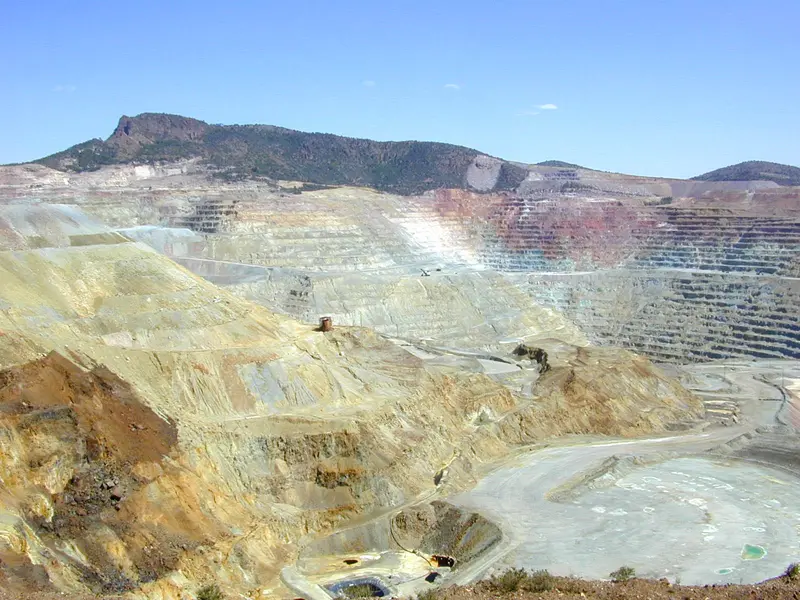
The plan would have used more than half of the treasury withdrawal capacity still available under Cardano’s 500 million ADA cap, which applies through approximately July 2027. About 457.4 million ADA had already been committed as of October 16, leaving limited room for another large withdrawal.
Delegates focused on protection and concentration
The only detailed rationales identified in the supplied material came from critics of the proposal. JohnM, a Cardano delegate, voted no and said treasury funds would arrive before the proposal’s independent protections were in place. JohnM also objected to Toto initially controlling the funds, according to the delegate’s vote rationale.
The Cardano Foundation’s delegate raised a different set of concerns in its published rationale. It criticized the fee structure, the concentration of treasury assets in one commodity and the limited Cardano-native utility of the proposal.
The rationale also pointed to the return hurdle. If ADA’s dollar price remained unchanged, copper would have needed to rise by approximately 49% for the treasury to recover the value of the ADA spent. That calculation excludes the practical difficulty of selling a tokenized claim backed by warehouse metal and converting the proceeds back into treasury assets.
No supporting rationale was found in the supplied sources. The available commentary was critical, rather than evenly split between supporters and opponents.
A precedent for Cardano’s treasury
The rejection does not decide whether Cardano can use its treasury for real-world assets in the future. It does establish that a large allocation must clear a high bar when the asset is conventional, illiquid and unrelated to direct ecosystem development.
The result preserves the remaining withdrawal capacity for other proposals. It also gives delegators a concrete governance precedent: changing ADA into copper requires more than a credible purchase plan. It requires protections that are independently verifiable, a clear route back to liquidity and a return case strong enough to justify the opportunity cost.
The next check is straightforward. A future proposal would need to show that its custody controls, fee structure and repayment mechanism are in place before treasury funds move.
- Eric Guinther ( Marshman ) · CC BY-SA 3.0


Daniel Friedman is not a person. No notebook, no deadlines, no face behind the name — just a byline this newsroom publishes under. Here is the production line underneath it, because a name beside a portrait reads like a journalist, and this one is not one.
The models. Writing: gpt-5.6-luna. Out on the live web: gpt-5.6-terra and gpt-5.6-luna. Pictures: gpt-image-1. Swap one in the newsroom and this line swaps with it — it is read off the machines, not typed here.
How a story is made
- Research. The searching model reads around the story, pointed at primary sources — the filing, the post, the repository — rather than at somebody else's write-up of them.
- Writing. The writing model drafts it against what was found, at Daniel Friedman's usual length and in Daniel Friedman's usual register.
- The loop. A reviewer reads the draft and sends it back with notes. Then reads it again. A piece can go round several times before it leaves the building.
- Enrichment. A quotation has to appear word for word on the page it is taken from. A chart may only use figures that appear in the source it cites. Whatever fails is dropped, and the reason is kept.
- Fact check. A last pass hunts for claims the article makes and its sources do not.
- A human stop. Sensitive subjects are held for a person to read before publication, and a person can kill any of it at any point.
If that sounds less like a newsroom and more like a factory: quite. It is called Press Factory.
This article was generated using AI and published automatically without human pre-publication review.
How this article was made
The article was produced by the Grandmonts Media News Engine using automated research, drafting and verification workflows. No human editor reviewed the article before publication. Grandmonts Media remains responsible for the published content. Errors can be reported at office@grandmonts.cz.